Moving to the Twin Cities West Metro: A Local Guide
10 min read · Published July 2026 · By Bryce Caldwell

The Twin Cities west metro gives relocating buyers nine distinct choices: lake towns such as Wayzata, Orono, Deephaven, Excelsior, Shorewood, and Minnetrista; larger suburban options in Minnetonka and Plymouth; and Eden Prairie farther southwest. The right fit depends on your budget, school assignment, commute, access to parks or Lake Minnetonka, and tolerance for winter logistics - and I verify those property by property before you buy.
What are the best western Twin Cities suburbs to live in?
There is no single best western suburb for every buyer; Wayzata favors walkable lake-town living, Orono and Minnetrista offer a more land-oriented setting, Minnetonka balances lake access with a broader housing range, and Eden Prairie and Plymouth add larger suburban park systems. Deephaven, Excelsior, and Shorewood round out the Lake Minnetonka choices, each with a different address-level mix of homes and access.
I start with the life you want to repeat on an ordinary Tuesday: walk to the lake and local businesses, maintain more land, find a particular school district, or stay close to a job corridor. That answer narrows the map faster than a generic list of suburb rankings.
The existing Minnetonka Living guides for Eden Prairie, Plymouth, Minnetonka, Wayzata, Orono, Deephaven, Excelsior, Shorewood, and Minnetrista are useful next reads because a west-metro move is really a comparison among places, not one city boundary.

Which western suburb fits my budget and housing goals?
The July 2026 Zillow aggregate indicators show a wide west-metro spread: typical home values range from $496,327 in Minnetonka to $1,155,624 in Orono, while inventory ranges from 6 homes in Excelsior to 308 in Plymouth. These are directional comparison points, not an appraisal or MLS substitute, and the exact house, lot, and lake access still change the decision.
Zillow aggregate snapshot, refreshed July 12, 2026, with data through June 30, 2026: Wayzata typical $946,443; median list $1,656,333; inventory 70; 32 days pending; year over year +5.5%. Orono typical $1,155,624; median list $1,617,166; inventory 63; year over year +6.5%. Deephaven typical $1,096,249; median list $1,761,666; inventory 23; year over year +3.7%.
Zillow aggregate snapshot: Minnetonka typical $496,327; median list $406,983; inventory 209; 19 days pending; year over year +3.5%. Eden Prairie typical $512,268; median list $505,000; inventory 230; 17 days pending; year over year +2.9%. Plymouth typical $518,482; median list $504,500; inventory 308; 16 days pending; year over year +2.1%.
Zillow aggregate snapshot: Excelsior typical $817,538; inventory 6; year over year +0.3%. Shorewood typical $834,881; median list $974,991; inventory 36; year over year +4.6%. Minnetrista typical $695,447; median list $843,833; inventory 52; year over year +2.7%. The snapshot does not provide days pending for these three places.
What do the current west-metro housing indicators actually tell me?
The current Zillow indicators are most useful for showing relative scale and available choice, not for predicting the value of a specific home. Plymouth has the largest listed inventory in this snapshot at 308, followed by Eden Prairie at 230 and Minnetonka at 209; Excelsior has 6 and Deephaven 23, so a buyer's search experience can feel very different from one suburb to the next.
Typical home value and median list price are different measures, so I do not treat either as a property appraisal. A listing's condition, school boundary, water access, acreage, and improvements can move it far from a townwide aggregate. I use the snapshot to set a conversation, then analyze the individual property and current comparable homes.
For sellers, the year-over-year indicators are also context rather than a pricing instruction: the snapshot ranges from +0.3% in Excelsior to +6.5% in Orono. I would still price from the home's condition, location, and competing inventory rather than applying a townwide percentage to a house.
| Community or group | Best starting point | Trade-off to test |
|---|---|---|
| Wayzata | Walkable lake-town life | Premium access and smaller lots |
| Orono / Deephaven | Privacy, shoreline, or acreage | Less uniform inventory and higher price spread |
| Minnetonka / Shorewood | Lake-area access with broader neighborhoods | The experience changes significantly by parcel |
| Excelsior | Historic town center and lake access | Very limited current inventory |
| Minnetrista | Land, trails, and lake-country setting | Longer drives and more property maintenance |
| Eden Prairie / Plymouth | More inventory, parks, and suburban practicality | Less walk-to-the-lake character |
How do school districts work across the west metro?
City boundaries do not reliably determine school districts in Hennepin County, so the school answer is an address question. The researched west-metro districts include Eden Prairie 272, Minnetonka 276, Westonka 277, Orono 278, and Wayzata 284; a home in a named city should never be assumed to feed the district that shares its name.
That distinction matters when a relocation search begins with a school requirement. A municipal address, tax record, listing description, and school assignment are related pieces of information, but they are not interchangeable. I keep the school question separate from the city question while we compare homes.
The existing guides best school districts in the Lake Minnetonka west metro, which school district is my Minnetonka address in, Wayzata vs. Minnetonka schools, and Wayzata vs. Orono for families cover the subject in more detail. They should supplement, not replace, an official address check.
How can I verify the school district for a specific address?
Verify the school district through the district's official address tool or enrollment office before relying on a listing. Wayzata Public Schools provides a school search, Orono provides resident-enrollment guidance, and Eden Prairie provides a find-my-school tool; Minnetonka, Westonka, and Hennepin County also provide official district information. Final assignment must be confirmed by address and the district itself.
I would verify the exact property after identifying a serious candidate and again before making a decision, because the school assignment is one of the facts that can change the practical value of a move. The same address-level discipline applies to taxes, utilities, commute assumptions, and property-specific costs.
The official sources supplied for this guide are Hennepin County's cities-and-school-districts page, Wayzata's school search, Orono's resident-enrollment page, Minnetonka Schools' district page, Eden Prairie's find-my-school page, and Westonka's realtor resource. A listing's school field is a starting point, not the final answer.
When will the Green Line Extension open, and which suburbs will it serve?
The METRO Green Line Extension is currently scheduled for 2027 and is planned as a 14.5-mile, 16-station light-rail extension from Minneapolis through St. Louis Park, Hopkins, Minnetonka, and Eden Prairie. The Metropolitan Council estimates approximately 56,000 people will live within a 10-minute walk and nearly 81,000 jobs will be along the corridor.
That planned infrastructure is relevant to a west-metro relocation search, but it is not a commute guarantee for every address. I treat the line as a future transportation factor to investigate alongside the actual station location, work destination, schedule, and daily travel pattern.
The Metropolitan Council's project and About pages are the current sources for the 2027 schedule, route, station count, corridor communities, and projected walk access. Schedules and project conditions can change, so buyers should check the current official information when the timing affects a purchase decision.
Where can I find parks and trails in the west metro?
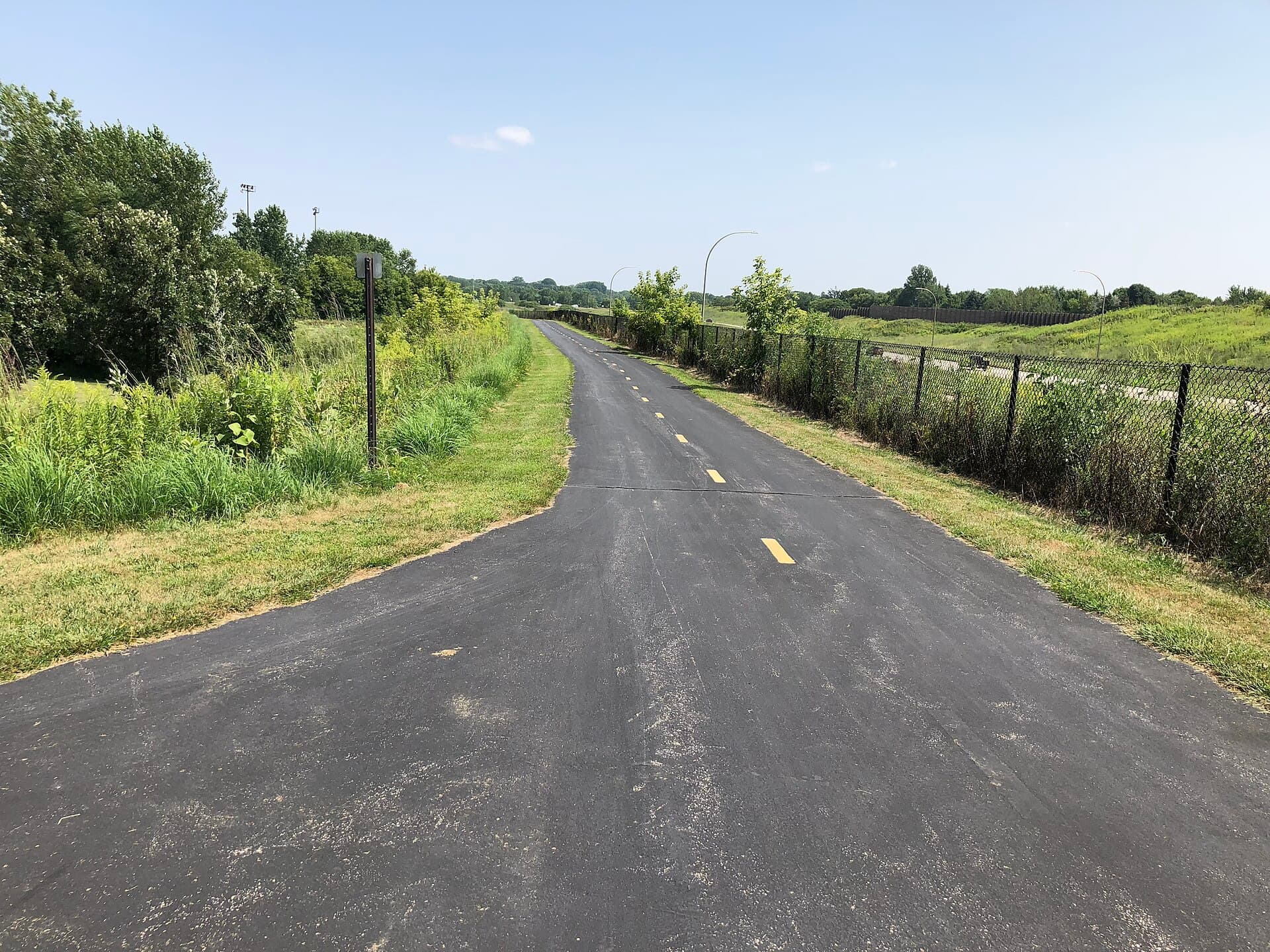
Plymouth is the clearest researched example of west-metro park scale: the city currently reports 1,834 acres of parkland and 188 miles of trails. Its Northwest Greenway adds nearly 315 acres and 7.7 miles of paved trails, giving buyers who prioritize everyday outdoor access a concrete way to compare a suburban setting with the lake-focused towns.
Those figures describe Plymouth's system, not every suburb in the west metro. For a specific home, I look at the nearby trail connection, park access, and how those features fit the family's actual routine rather than assuming a citywide acreage number applies equally to every neighborhood.
The city's parks and trails page and Northwest Greenway page are the sources for these figures. The west metro also includes lake access, but parks, trails, and shoreline amenities are separate questions when we evaluate a property.
How should I think about west-metro commute and property taxes?
Commute and property taxes are address-level questions, not reliable townwide slogans. The Green Line Extension is a planned transportation factor for Minnetonka and Eden Prairie, while tax bills vary by city, county, school district, special districts, assessed value, exemptions, and homestead status. I compare the actual destination, route, parcel, and tax statement before treating either as a buying advantage.
For relocating families, I separate a suburb's regional access from the daily trip from one house. A home near a planned station is not the same as a home with a short drive to work, and a town's typical value is not the same as the tax bill on a particular parcel.
Use the Minnesota Revenue property-tax guidance and the Metropolitan Council's current project pages as starting points. For a specific purchase, verify the current tax statement, homestead eligibility, route conditions, station timing, and any property-specific utility or maintenance costs.
How do I plan for Lake Minnetonka access after moving?
Lake Minnetonka access is practical but location-specific: public launches, beaches, restrooms, and parking are mapped by the Lake Minnetonka Conservation District, which also warns that rules can change. A west-metro buyer should confirm the particular amenity, parking conditions, and current rules instead of assuming that living near the lake means a particular public access point is available.
The lake towns in this guide include Wayzata, Orono, Deephaven, Minnetonka, Excelsior, Shorewood, and Minnetrista. Their proximity to Lake Minnetonka does not create the same waterfront experience, and a nearby public beach or launch is not the same as private shoreline or a private dock.
I use the LMCD maps for public launches, beaches, restrooms, and parking, then review the property itself for shoreline, easements, access, and restrictions. The LMCD's warning about changing rules is important for anyone buying around a seasonal amenity.
What should relocating buyers know about Twin Cities snow?
The Twin Cities averages approximately 54 inches of snow, and road clearance depends on route classification: MnDOT describes roughly 0-3 hours for major roads and 9-36 hours for less-traveled routes. That means winter planning belongs in a home search, especially when comparing a primary route, a neighborhood street, a longer driveway, and access to work or school.
I do not attach a generic homeowner cost estimate to snow because property-specific expenses vary. Instead, I ask how the driveway, sidewalks, parking, utilities, and daily route will be handled, and I separate state-road clearance information from what a private owner or association is responsible for.
MnDOT's Metro maintenance and snow-and-ice-removal pages are the sources for the average snowfall and route-clearance ranges. Final winter logistics still need to be checked for the individual property, route, and service arrangement.
What should I verify before buying in the west metro?
Before buying, verify five property-specific facts: final school assignment, taxes, commute, utilities, and costs tied to the property itself. Then compare the home against the suburb's actual lifestyle - lake access, trails, parks, inventory, and the housing indicators - so the decision reflects how you will live there, not just the city name on a listing.
My process is to use the city as the first map, the official district and amenity tools as the fact check, and the property as the final unit of analysis. A planned transit line, a trail network, or a Zillow aggregate indicator can inform the search, but none replaces due diligence on the address.
If you are relocating from outside Minnesota, I would build the search in this order: identify the daily-life priority, choose two or three suburbs to compare, check official school and amenity sources, review current inventory, and then inspect the individual home for access, maintenance, utilities, taxes, and winter practicality.
Bryce’s take
I do not think the right west-metro move starts with a ranking. I start by asking whether you want a walkable lake town, more land, a large park system, or a particular school assignment, then I verify the exact address before we fall in love with a house. That saves buyers from discovering after an offer that the city, district, commute, or lake access was not what they assumed.

Key takeaways
- Hennepin County says city boundaries do not reliably determine school districts; relevant districts include Eden Prairie 272, Minnetonka 276, Westonka 277, Orono 278, and Wayzata 284.
- The METRO Green Line Extension is currently scheduled for 2027, planned at 14.5 miles and 16 stations through Minneapolis, St. Louis Park, Hopkins, Minnetonka, and Eden Prairie.
- Plymouth currently reports 1,834 acres of parkland and 188 miles of trails; its Northwest Greenway has nearly 315 acres and 7.7 miles of paved trails.
- The Twin Cities averages approximately 54 inches of snow; MnDOT describes road-clearance ranges of roughly 0-3 hours on major roads and 9-36 hours on less-traveled routes.
- In the July 12, 2026 Zillow aggregate snapshot with data through June 30, 2026, inventory ranges from 6 in Excelsior to 308 in Plymouth; these indicators are not an appraisal or MLS substitute.
Frequently asked questions
What is the best western suburb of the Twin Cities?
How do I find out what school district my address is in?
When will the Green Line Extension open and which suburbs will it serve?
Sources and verification
- Hennepin County — cities and school districts
- Wayzata Public Schools — school search
- Orono Schools — resident enrollment
- Minnetonka Public Schools — district information
- Eden Prairie Schools — find my school
- METRO Green Line Extension — project overview
- City of Plymouth — parks and trails
- City of Plymouth — Northwest Greenway
- Lake Minnetonka Conservation District — maps and amenities
- MnDOT — metro maintenance and snow removal
- Minnesota Revenue — property-tax guidance
- Minnetonka Living — July 2026 market snapshot
Written by
Bryce Caldwell is a RE/MAX Advantage Plus agent who knows the Lake Minnetonka corridor and the Twin Cities west metro. Full-time since 2022 with a 5.0 rating across 27 reviews, he gives buyers and sellers honest, no-pressure guidance — and writes these guides.
Explore these areas
- Wayzata, MN real estateWalkable downtown, lake access two blocks from dinner, and the #1 school district in Minnesota.
- Orono, MN real estateWooded acreage and private drives on the north shore. The west metro's quiet ceiling.
- Deephaven, MN real estateOld-growth lanes and dock rights minutes from the channel. Established and quiet.
- Minnetonka, MN real estateMature, leafy, and central — the reliable move-up address with the 276 schools.
- Eden Prairie, MN real estateTop-five schools, 130+ miles of trails, and the best commute in the metro. The value play.
- Excelsior, MN real estateA true village on the water — porches, sailboats, and patio suppers walkable from home.
- Shorewood, MN real estateQuiet, wooded, and next to Excelsior — the 276 schools with a little more yard.
- Minnetrista, MN real estateThe rural west edge of the lake — acreage, new construction, and room to breathe.
- Plymouth, MN real estateOne of Minnesota's largest suburbs — parks, jobs, and an easy northwest commute.
Keep reading
More west metro guides

The Streetcar Boat Minnehaha and Excelsior's Streetcar History, Explained
The Minnehaha is a 1906 streetcar boat built to meet Twin City Rapid Transit trolleys at Excelsior and Deephaven. Here is its story — and the honest reason it is not sailing in 2026.
7 min read · July 2026

Cheap and Free Things to Do With Kids Around Lake Minnetonka (With Real Prices)
A ranked list of low-cost family outings around Lake Minnetonka with actual prices: the $2 Excelsior streetcar, the $9/day Three Rivers swim pond, the free beaches at Excelsior Commons, and the Tuesday farmers market — plus which spots are worth a weekday and where parking actually works.
8 min read · July 2026
Where to Get Coffee and Breakfast in Wayzata
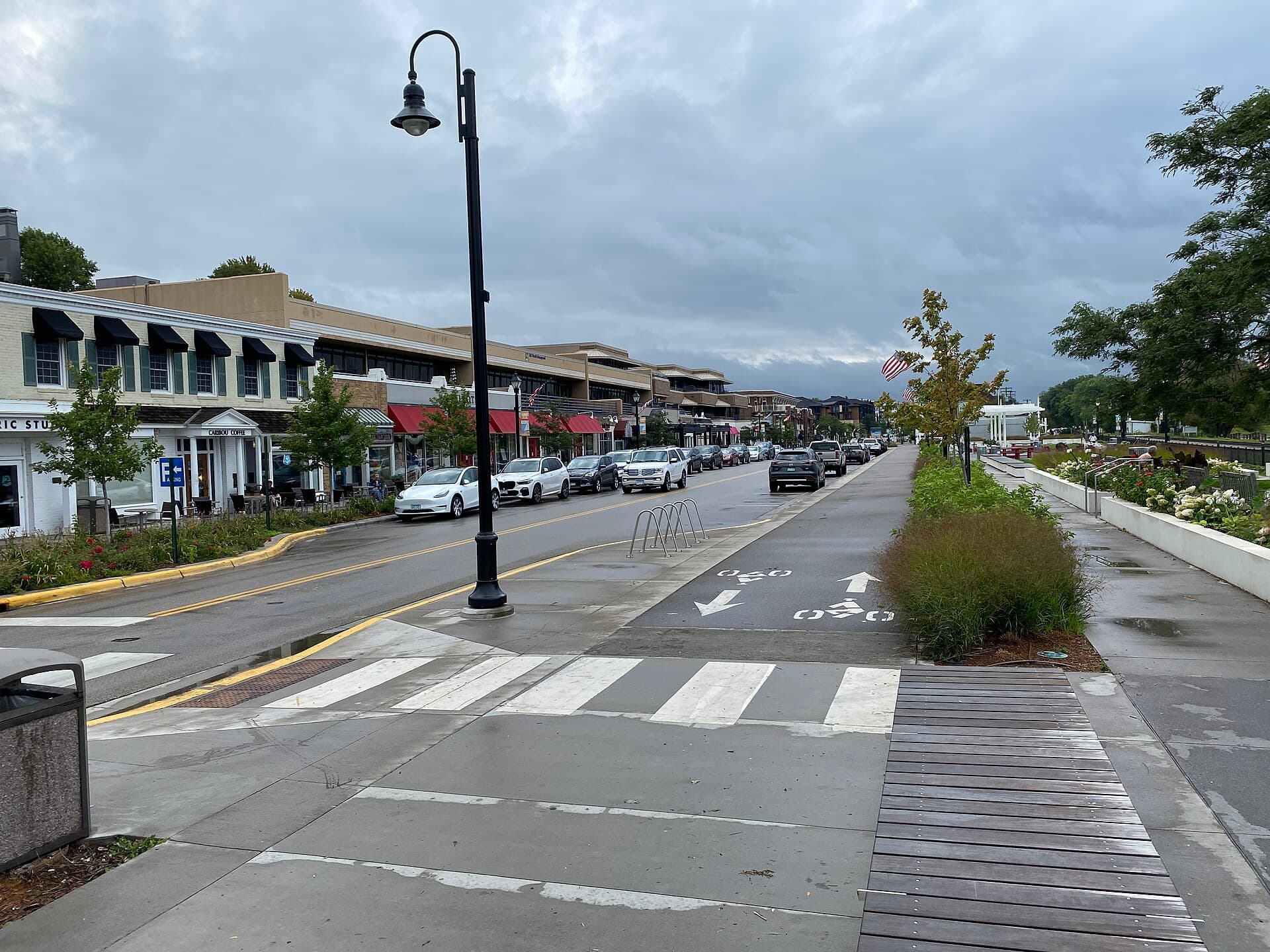
Two new spots reset Wayzata's morning: Rustica Bakery and Cafe (795 Lake St E, opened Nov 2025) for a sit-down bakery-cafe, and Toastique (320 Engel St) for grab-and-go toast and smoothies. Plus 318 Cafe in Excelsior for Dogwood coffee.
6 min read · July 2026