Can You Remodel a Lake Minnetonka Waterfront Home?
6 min read · Published July 17, 2026 · By Bryce Caldwell
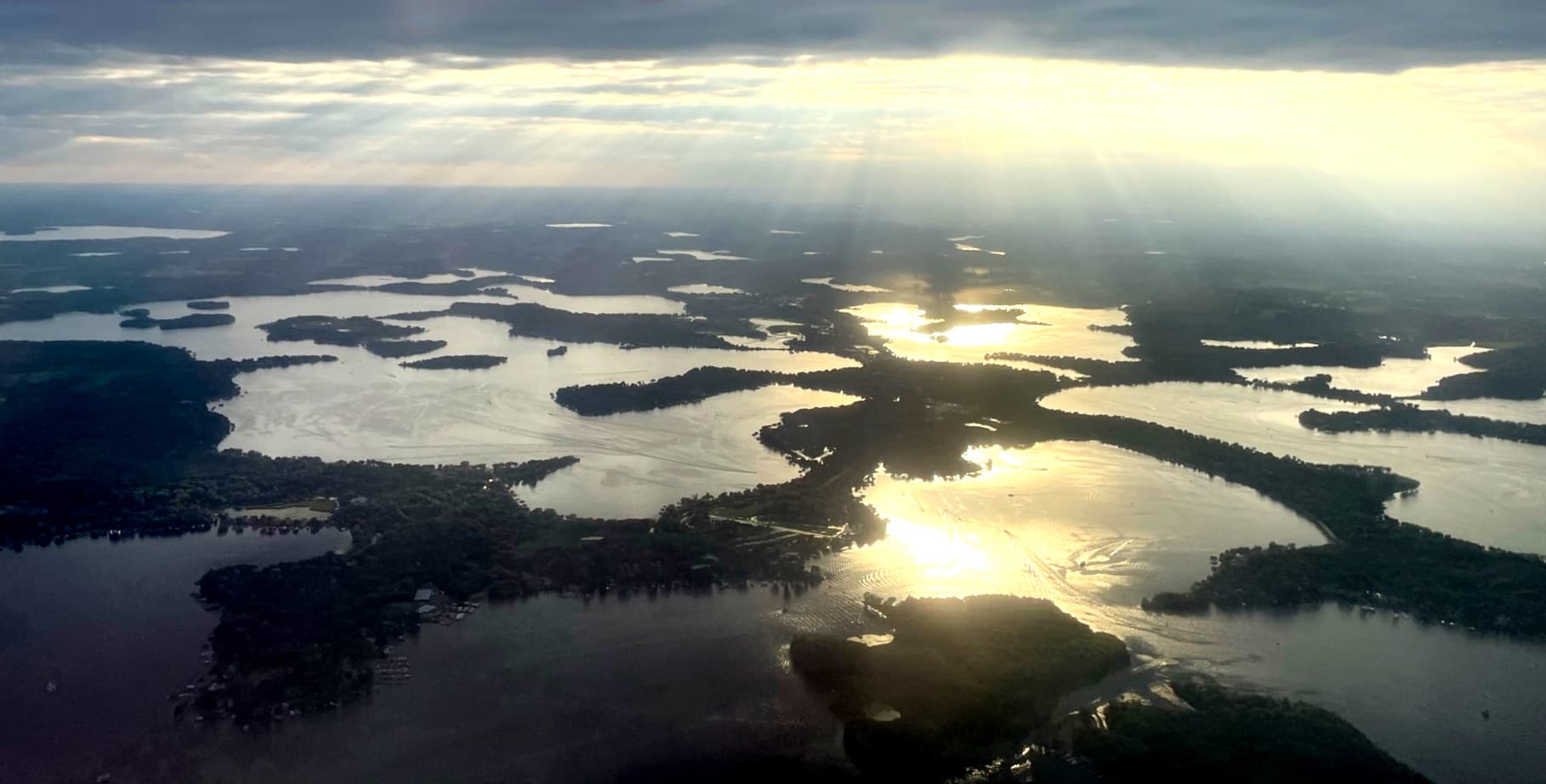
A Lake Minnetonka waterfront home may be eligible for remodeling or replacement, but there is no lake-wide answer and no project should be assumed approvable without local, address-specific review. Minnesota shoreland standards are administered by local governments, which may be more restrictive than the state baseline; the ordinary high water level, lot conditions, bluff context, and other approvals can all change the answer.
At a glance
Guide highlights
- Minnesota shoreland standards are administered locally, and Lake Minnetonka municipalities may impose rules that are more restrictive than the state baseline.
- The regulatory ordinary high water level boundary and the property's exact lot and bluff context should be verified through the survey and city before planning waterfront work.
- Minnesota's state shoreland baseline is 25% impervious cover per lot, but local ordinances can be stricter.
Can you remodel or rebuild a Lake Minnetonka waterfront home?
You may be able to remodel or rebuild a Lake Minnetonka waterfront home, but the answer is determined locally for the specific address rather than by one universal lake rule. State shoreland standards are administered by local governments, and municipalities may adopt more restrictive rules, so a plan that appears workable elsewhere on the lake may not be approvable on your lot.
Start with the city or other local shoreland administrator before relying on a listing description, a prior project, or a preliminary design. Local land-use approval is its own track and does not replace any needed review from the Lake Minnetonka Conservation District, Minnesota Department of Natural Resources, or Minnehaha Creek Watershed District.
What should you verify before designing a waterfront project?
Before designing a Lake Minnetonka waterfront project, verify the regulatory ordinary high water level boundary and the property's exact lot and bluff context through the survey and city. Those property-specific facts matter because shoreland standards are applied locally, and local rules may be stricter than the state baseline.
Impervious cover is another early check. Minnesota's state shoreland baseline is 25% impervious cover per lot, but a local ordinance may set a stricter standard. The due-diligence list below separates the questions that need city review from approvals that can involve other agencies.
| Check | What the research establishes | Who to verify with |
|---|---|---|
| Local shoreland standards | State shoreland standards are administered locally, and municipalities may be more restrictive. | City or local shoreland administrator |
| Ordinary high water level | The regulatory boundary should be confirmed for the property. | Survey and city |
| Lot and bluff context | Exact lot and bluff conditions should be verified for the address. | Survey and city |
| Impervious cover | The state shoreland baseline is 25% impervious cover per lot; local rules can be stricter. | City or local shoreland administrator |
| Existing legal nonconformity | Repair, replacement, and improvement may continue, but expansion is not allowed, subject to law. | City or local shoreland administrator |
| Variance | The practical-difficulties standard is property-specific, and economics alone is insufficient. | City or local shoreland administrator |
| Septic review | Additions and remodels in shoreland or wellhead areas may require review or inspection; Orono runs its own program. | Hennepin County or Orono |
| Water and watershed work | City approval is separate from potential LMCD, DNR, or MCWD approval for waterfront-related work. | City, LMCD, DNR, and MCWD as applicable |
Can a nonconforming Lake Minnetonka home be replaced?
A legal nonconformity may continue through repair, replacement, or improvement, but not expansion, subject to applicable law. That is not a blanket project approval: the local authority must evaluate the existing legal condition and the scope of the proposed work for the specific Lake Minnetonka address.
The distinction between continuation and expansion is important at the concept stage. Confirm how the city treats the current structure and every proposed change before a buyer removes contingencies or an owner commits to plans and construction contracts.
Can you get a variance for a Lake Minnetonka rebuild?
A Lake Minnetonka shoreland variance is evaluated under a property-specific practical-difficulties standard; cost or economics alone is not enough. Whether a variance is available depends on the facts of the parcel and proposal, so it should be discussed with the local authority rather than assumed from a neighboring property's outcome.
A variance is not a substitute for identifying the relevant boundary, lot conditions, and local standards first. Ask the city what information it needs to assess the address and whether a separate approval process applies to the proposed work.
What permits can be required beyond city approval?
City land approval is separate from possible approvals for docks, shore stabilization, grading, wetlands, floodplain work, dredging, and similar water or watershed activities. Depending on the work, review can involve the Lake Minnetonka Conservation District, Minnesota Department of Natural Resources, and Minnehaha Creek Watershed District in addition to the city.
Septic review can also be part of the project. Hennepin County says additions and remodels in shoreland or wellhead areas may be subject to septic review or inspection; Orono administers its own septic program. Confirm the responsible program before finalizing the scope.
Bryce’s take
My advice to Lake Minnetonka buyers and sellers is to treat remodel or rebuild potential as a due-diligence question, not a selling point. Before a buyer prices a project into an offer or a seller markets future possibilities, I would want the city and the relevant agencies to address the actual property and scope.

Key takeaways
- Minnesota shoreland standards are administered locally, and Lake Minnetonka municipalities may impose rules that are more restrictive than the state baseline.
- The regulatory ordinary high water level boundary and the property's exact lot and bluff context should be verified through the survey and city before planning waterfront work.
- Minnesota's state shoreland baseline is 25% impervious cover per lot, but local ordinances can be stricter.
- A legal nonconformity may continue through repair, replacement, or improvement, but not expansion, subject to applicable law.
- City land approval is separate from potential LMCD, DNR, MCWD, and septic review for waterfront-related work.
Frequently asked questions
Can you remodel a Lake Minnetonka waterfront home?
Can you rebuild a nonconforming lakefront home in Minnesota?
Is there one setback rule for all Lake Minnetonka homes?
Do you need permits to rebuild a Lake Minnetonka waterfront home?
Sources and verification
These are the public sources used for facts that can change. For an address-specific decision, verify the current details before you act. Read our research standards.
- Minnesota DNR: Shoreland regulations
- Minnesota DNR: Shoreland property owners
- Minnesota Revisor: Minnesota Rules, chapter 6120
- Minnesota Revisor: Minnesota Statutes, section 462.357
- Hennepin County: Septic systems
- Hennepin County: Subsurface sewage treatment systems standards ordinance
- Minnesota DNR: Public waters permits
- Lake Minnetonka Conservation District: Lake shore owners
- Minnehaha Creek Watershed District: Permits
- Minnehaha Creek Watershed District: Dredging rule
- City of Minnetonka: Planning applications
- City of Wayzata: 2026 development application packet
Written by
Bryce CaldwellBryce Caldwell is a RE/MAX Advantage Plus agent who knows the Lake Minnetonka corridor and the Twin Cities west metro. Full-time since 2022 with a 5.0 rating across 27 reviews, he gives buyers and sellers honest, no-pressure guidance — and writes these guides.
Explore these areas
- Wayzata, MN real estateWalkable downtown, lake access two blocks from dinner, and the #1 school district in Minnesota.
- Orono, MN real estateWooded acreage and private drives on the north shore. The west metro's quiet ceiling.
- Deephaven, MN real estateOld-growth lanes and dock rights minutes from the channel. Established and quiet.
- Minnetonka, MN real estateMature, leafy, and central — the reliable move-up address with the 276 schools.
- Excelsior, MN real estateA true village on the water — porches, sailboats, and patio suppers walkable from home.
- Shorewood, MN real estateQuiet, wooded, and next to Excelsior — the 276 schools with a little more yard.
- Minnetrista, MN real estateThe rural west edge of the lake — acreage, new construction, and room to breathe.
Keep reading
More west metro guides

Moving to Minnetonka, MN — More House, Top Schools
The west metro's value play for move-up families: top-ranked ISD 276 schools, an easy I-394 commute, and far more house per dollar than the lakefront towns.
7 min read · July 2026
Moving to Minnetrista, MN — The Land-First Buyer's Guide
Lake Minnetonka's rural western frontier — acreage, new construction, and open space for land-first buyers, in the high six figures, with Westonka ISD 277 schools.
7 min read · July 2026
Moving to Orono, MN — What I Tell Privacy-First Buyers
Lake Minnetonka's privacy-first estate town: five-acre-minimum zoning, wooded north-shore lots, and its own top-rated Orono ISD 278 schools, in the lake's seven-figure tier.
7 min read · July 2026